What car insurance does Florida require?
For ordinary private-passenger vehicle registration, Florida generally requires at least $10,000 in Personal Injury Protection, or PIP, and $10,000 in Property Damage Liability, or PDL.
Bodily injury liability coverage generally is not part of that ordinary registration baseline. Separate financial-responsibility requirements, DUI convictions and certain vehicle uses can change what is required. Florida Bar automobile insurance guide
Meeting the registration requirements does not establish that a policy will adequately protect you after a serious crash. For example, property damage liability pays for covered damage you cause to someone else’s property. It does not repair your own car.
Which coverage protects whom?
| Coverage | What it generally addresses | Important distinction |
|---|---|---|
| Bodily Injury Liability — BI | Other people’s injuries when you are legally responsible | Separate from coverage for your own injuries |
| Property Damage Liability — PDL | Other people’s vehicles or property you are legally responsible for damaging | Several claims may share one accident limit |
| Personal Injury Protection — PIP | Eligible medical expenses and other benefits for covered people, regardless of fault | Percentages, eligibility rules and limits apply |
| Uninsured/Underinsured Motorist — UM/UIM | Covered injury damages caused by a driver with no applicable BI insurance or insufficient limits | Does not repair your vehicle |
| Collision | Covered crash damage to your vehicle | Usually subject to a deductible |
| Comprehensive | Covered theft, flood, fire and other noncollision losses | Separate from collision coverage |
| Medical Payments — MedPay | Eligible accident-related medical expenses under the policy | Ask how it coordinates with PIP |
The precise coverage depends on the policy, endorsements and applicable law. Florida Department of Financial Services coverage overview
For information about fault, evidence and insurance review after a crash, see our car accidents practice page.
What does “full coverage” actually mean?
“Full coverage” is not a standardized promise that every accident-related expense will be paid.
People commonly use the phrase to describe a policy that includes liability, comprehensive and collision coverage. The phrase alone does not tell you whether UM/UIM is included, how high the limits are, which drivers are covered or what deductibles apply.
Ask for the actual coverage list and amounts. A policy’s declarations page summarizes those selections; the policy and endorsements explain their terms. NAIC auto insurance shopping tool
How do I read limits such as 100/300/100?
On a liability quote, 100/300/100 generally means:
| Number | Meaning |
|---|---|
| 100 | Up to $100,000 in bodily injury liability coverage for one person |
| 300 | Up to $300,000 in bodily injury liability coverage for everyone injured in one accident |
| 100 | Up to $100,000 in property damage liability coverage for one accident |
The per-person limit still applies even when the total accident limit is higher. One injured person cannot automatically use the entire $300,000 bodily injury limit.
These are coverage ceilings. They do not establish what an injury claim is worth or guarantee payment. Some policies use different arrangements, such as a combined single limit, so confirm the labels on your quote. Explanation of liability limits
-
$100,000
Bodily injuryPer person
-
$300,000
Bodily injuryPer accident
-
$100,000
Property damagePer accident
Same crash, different liability limits
Imagine you cause a crash that injures three people. Each has $40,000 in covered, legally recoverable injury damages, for a total of $120,000.
To focus on the limits, assume responsibility, coverage and required legal adjustments have already been resolved. The figures represent recoverable damages, rather than medical bills alone.
| Policy choice | How the limits affect this example |
|---|---|
| $25,000 per person / $50,000 per accident | No person can receive more than $25,000 under this coverage, and everyone’s combined recovery under it cannot exceed $50,000 |
| $100,000 per person / $300,000 per accident | Each $40,000 claim fits within the per-person limit, and the $120,000 total fits within the accident limit |
Under the first policy, the $50,000 accident limit creates a substantial coverage shortfall. How that limited amount is allocated is a separate question; it should not simply be assumed that everyone receives an equal share.
Property damage creates another potential gap. Suppose the same crash causes $50,000 in covered damage to other people’s vehicles. A $25,000 property damage limit leaves $25,000 beyond that policy limit.
A policy-limit shortfall can create potential personal exposure. Whether additional amounts are owed or collectible depends on the circumstances and applicable law.
How much bodily injury liability coverage should I carry?
There is no single amount that fits every household.
When comparing limits, consider:
- The financial consequences of causing injuries to several people.
- Your income, financial obligations and potential liability exposure.
- The drivers and vehicles in your household.
- The actual premium difference between available limits.
Ask the agent to price otherwise equivalent policies at several liability levels. A useful question is: “What does the additional protection cost, and what risk would I retain if I choose the lower limit?”
If you want liability protection beyond the available auto limits, ask about a personal umbrella policy and its underlying insurance requirements. Ask separately whether any UM protection is available; do not assume it is included.
Do I need uninsured motorist coverage if I have health insurance?
Health insurance and UM/UIM serve different purposes.
Health insurance pays covered medical expenses under its own rules. UM/UIM may provide a source of recovery for legally recoverable injury damages—including qualifying lost earnings and other losses—when the responsible driver has no applicable bodily injury insurance or insufficient limits.
Florida law generally requires auto policies providing BI coverage to include UM at matching limits unless a named insured validly rejects coverage or selects lower limits using an approved form. Read that selection carefully. Florida’s UM/UIM statute
Same injury, different UM choices
Suppose another driver causes a crash that injures you. You need medical treatment and miss work. That driver has no applicable bodily injury liability coverage.
- If you validly rejected UM: Your policy provides no UM benefits. PIP, health insurance or other sources may still apply, depending on the circumstances.
- If you purchased $100,000 per-person UM coverage: You may have an additional source of recovery for covered injury damages, subject to that limit and the claim’s requirements.
Purchasing a $100,000 limit does not create an automatic $100,000 payment. Benefits depend on coverage, proven damages and applicable law, including rules against duplicate recovery.
Also ask whether your UM coverage is stacked or nonstacked, who qualifies as an insured and how coverage applies in different vehicles. Our UM/UIM coverage guide addresses those issues in greater detail.
What should I understand about PIP?
Standard PIP generally pays 80% of eligible medical expenses and 60% of qualifying lost income, subject to benefit limits, selected options and other requirements.
Initial services and care within 14 days are a condition for medical benefits. Medical reimbursement can be limited to $2,500 without a qualifying emergency medical condition determination; non-emergency care is not automatically excluded altogether. Florida’s PIP statute
When reviewing a quote, ask whether it includes a PIP deductible or excludes work-loss benefits. Those selections can affect what protection remains after an accident.
See our Florida PIP and 14-day rule guide for more detail.
Hospital example: why doesn’t PIP pay the entire bill?
After a car crash, an injured driver receives a $10,000 hospital emergency-services bill. For this illustration, assume all services are covered and medically necessary; qualifying initial care and an emergency medical condition are established; $10,000 in PIP benefits remains available; a $1,000 deductible applies and is unmet; and the insurer validly elected the hospital emergency-services fee limit. Assume the billed charges are the hospital’s usual and customary charges, with no other adjustments.
| Calculation | Amount |
|---|---|
| Hospital emergency-services charge, assumed usual and customary | $10,000 |
| Applicable PIP deductible | −$1,000 |
| Charges remaining after the deductible | $9,000 |
| 75% hospital emergency-services reimbursement limit | $6,750 |
| PIP payment: 80% of $6,750 | $5,400 |
| 20% coinsurance on $6,750 | $1,350 |
PIP pays $5,400 under these assumptions. The $1,000 deductible and $1,350 coinsurance are amounts PIP does not pay in this illustration. Health insurance, MedPay or provider agreements may affect what the patient ultimately owes.
The $2,250 fee-limit reduction is a separate issue. It is not automatically a bill the patient must pay. Florida restricts collection of amounts above an applicable PIP fee limit, subject to statutory exceptions. Review the insurer’s explanation of benefits and the provider’s itemized bill before treating the unpaid balance as the patient’s responsibility.
The order matters: apply the deductible to the full covered charges before this fee-limit calculation and the 80% payment. Different services, policies and remaining benefits can produce different results. This is a hypothetical, not a calculation of a particular bill.
Sources: Fla. Stat. § 627.736(1)(a), (5)(a); Fla. Stat. § 627.739(2); Progressive Select Insurance Co. v. Florida Hospital Medical Center, 260 So. 3d 219 (Fla. 2018).
Should I choose a $500 or $1,000 deductible?
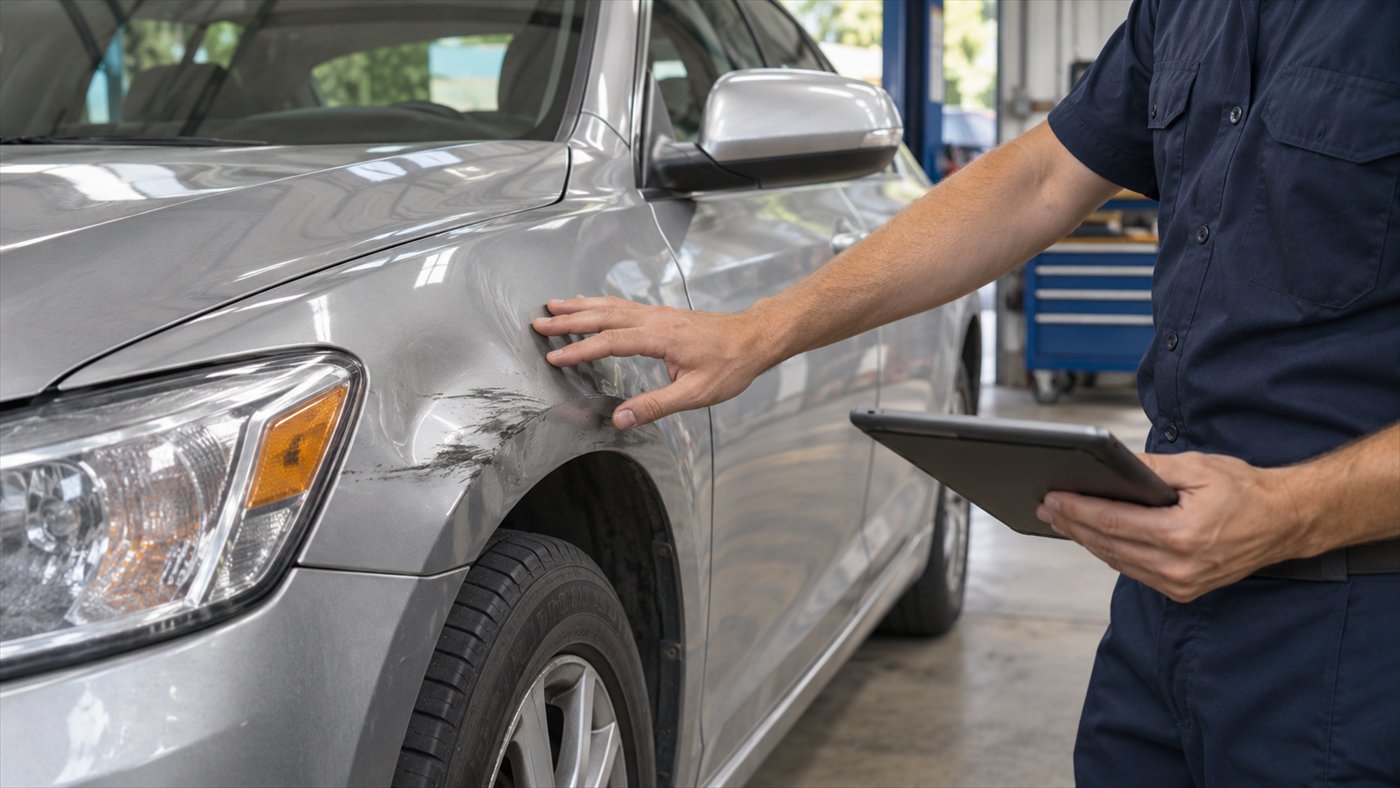
A higher deductible generally reduces the premium, while increasing the amount you retain when a covered loss occurs. Compare the actual savings with cash you could readily use after an accident. Florida’s guide to choosing deductibles
Same covered repair, different deductibles
Assume your car sustains $4,000 in covered collision damage, with no other adjustments.
| Collision deductible | Your share | Insurer’s payment |
|---|---|---|
| $500 | $500 | $3,500 |
| $1,000 | $1,000 | $3,000 |
The higher deductible shifts another $500 of this loss to you.
If that choice saves $100 per year, it would take five claim-free years at unchanged premiums to accumulate $500 in savings. That simple comparison does not predict future accidents or premium changes, but it makes the tradeoff easier to see.
Before selecting the higher amount, ask: “Could I comfortably pay this deductible next week?”
When should I consider dropping collision or comprehensive?
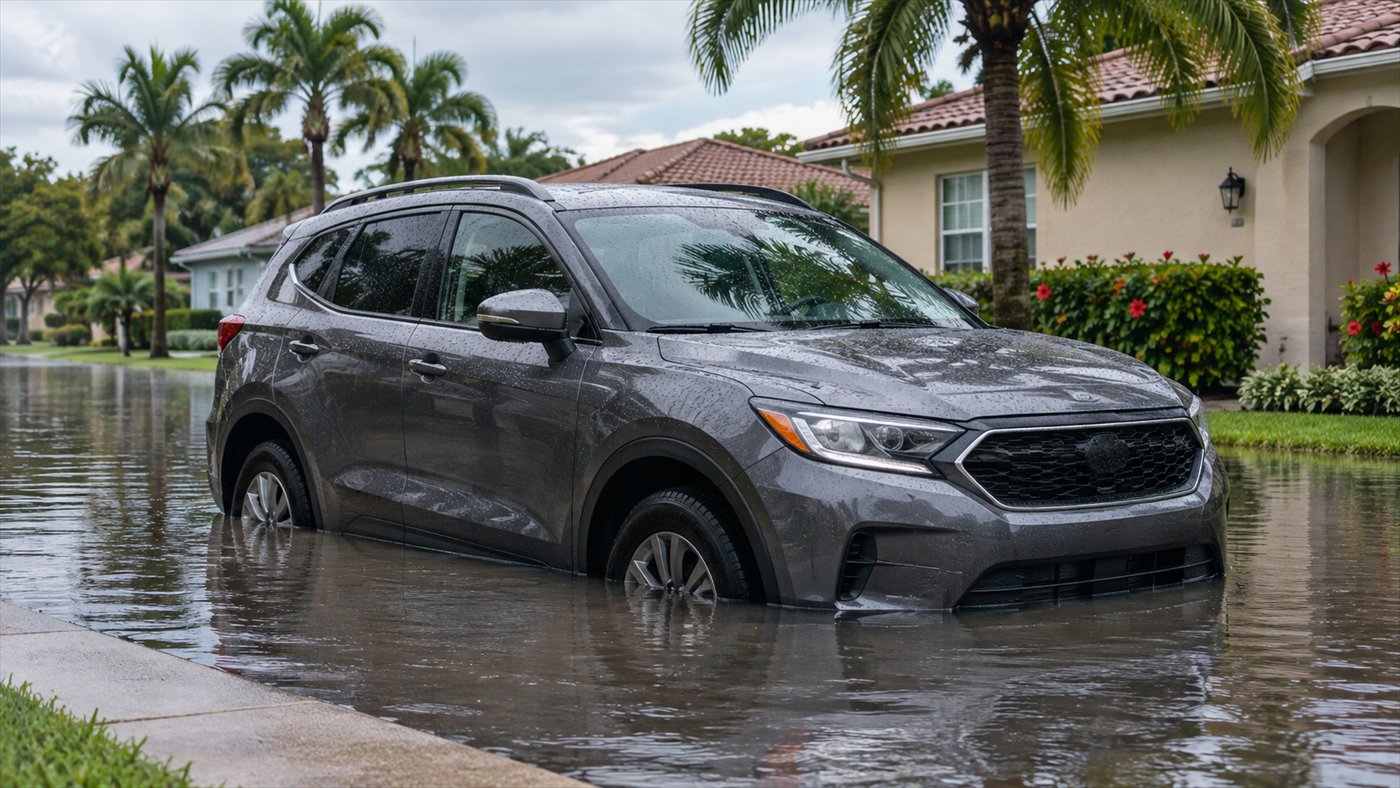
A vehicle’s age or mileage alone does not answer that question.
Compare its current value, the coverage premium, the deductible and your ability to fund a repair or replacement. Comprehensive and collision address different losses, so evaluate them separately.
A loan or lease may require both coverages and restrict deductible choices. Paying off the loan may remove that contractual requirement, but you would still face the cost of replacing a stolen or totaled vehicle.
Ordinary physical-damage coverage generally responds based on covered repair costs or the vehicle’s actual cash value, subject to the policy. It does not automatically pay what you originally spent. Florida automobile insurance toolkit
What about GAP and rental reimbursement?
GAP may address a qualifying shortfall between your auto loan balance and the insurance payment after theft or a total loss. It has its own restrictions and does not replace injury coverage or collision insurance. Compare the contract’s coverage and price before purchasing it. CFPB explanation of GAP
Rental reimbursement can help with replacement transportation after a qualifying covered loss. Check the daily amount, total limit and applicable duration. It is different from coverage for damage to a rental car you drive.
Policy-review checklist: before buying or renewing
Have your quote, current declarations page and relevant policy forms available.
The NAIC shopping tool provides additional questions for comparing policies.
Before buying or renewing, ask the agent to walk through a hypothetical crash using the exact coverage being quoted. Keep the issued declarations page, policy, endorsements and coverage-selection forms together, along with written confirmation of requested changes.