Understanding Your Rights After Motorcycle Accidents in Miami
Legal representation after a South Florida motorcycle accident can help you understand responsibility, available insurance, and the losses you may be entitled to pursue.
Riders and passengers in Miami, Doral, and Kendall should have a personal case review. This review will look at the crash details, important deadlines, and what to do next.
Use this page to prepare for a conversation with a motorcycle accident lawyer—not as a substitute for advice about your circumstances.
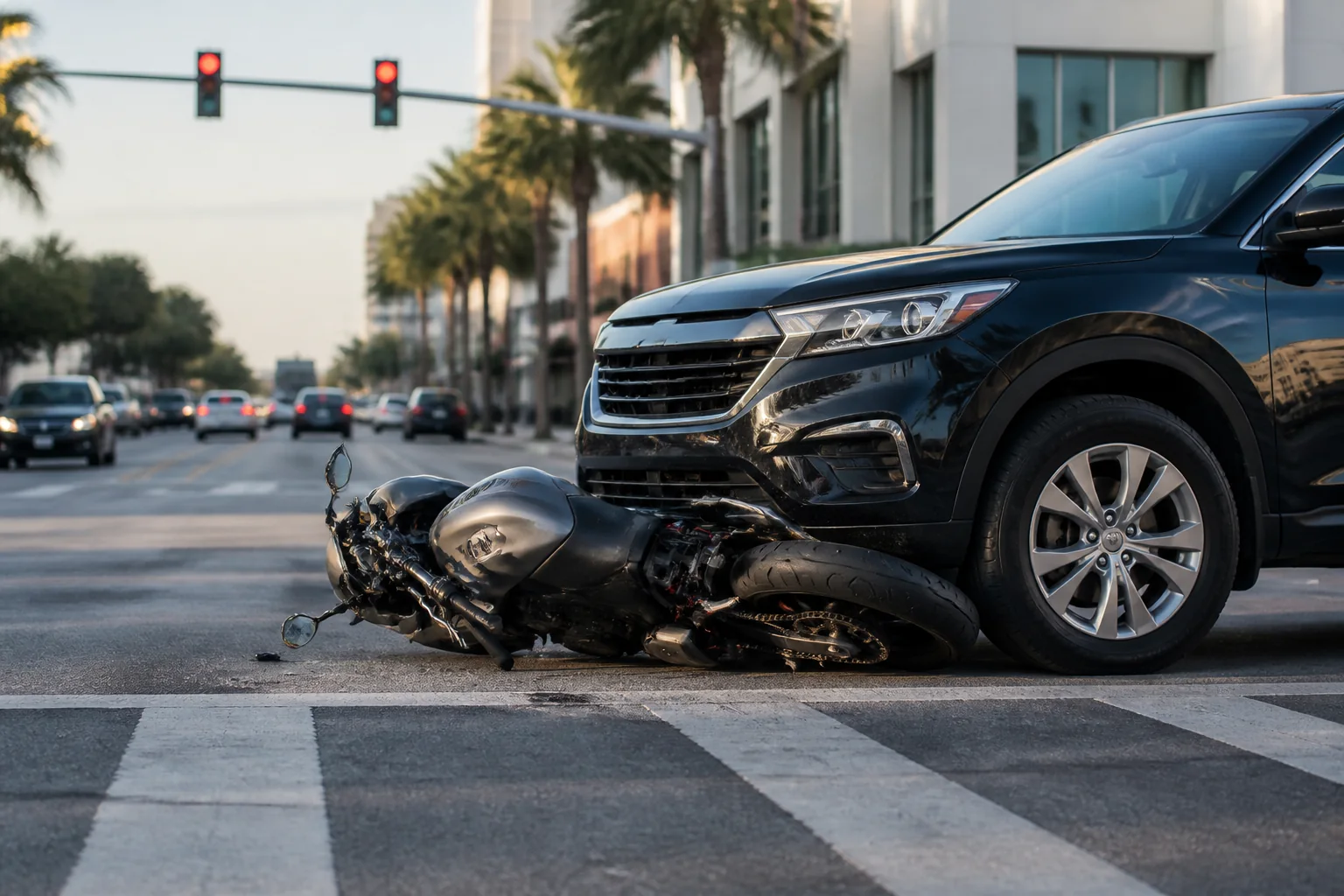
What can a motorcycle accident lawyer help you pursue?
A motorcycle accident lawyer can assess whether another party’s negligence caused your injuries and identify the damages supported by your case. The legal analysis connects unreasonable conduct to the collision and resulting harm; being injured alone does not establish another person’s liability. Florida’s negligence instructions focus on whether someone failed to use reasonable care under the circumstances. (www-media.floridabar.org)
Your immediate concern may be an unpaid hospital bill, a damaged motorcycle, or the prospect of returning to work with physical restrictions. Make those concerns part of the first conversation. Ask the attorney to separate urgent decisions from issues that require further investigation, rather than offering an unsupported settlement estimate.
A useful initial review should cover:
- Responsibility: The conduct alleged to have caused the crash and the evidence needed to evaluate it.
- Coverage: The insurance policies available for review, including your motorcycle policy.
- Losses: Treatment expenses, work disruption, property damage, and changes to daily life.
- Timing: The accident date, relevant correspondence, and deadlines requiring attention.
- Representation: The proposed scope of work, communication arrangements, and written fee terms.
Bring questions even if you do not yet have every document. The purpose of the discussion is to identify what needs attention, not to test how much legal terminology you know.
Legal support centered on South Florida riders
For a crash in Miami, Doral, or Kendall, make the precise location part of your consultation request. Provide the intersection, direction of travel, and responding agency if known. Avoid relying on a broad description such as “near Miami” when you can supply a map pin or report number.
Consider a hypothetical Doral collision involving a vehicle turning across a rider’s path. Rather than describing it only as a turning accident, explain where each vehicle approached from, what you personally observed, and whether anyone stopped afterward. Keep observations separate from assumptions about the other driver’s intentions.
For a Kendall crash, your main concern might instead be transportation to follow-up appointments or documenting missed shifts. A Miami rider may need help organizing records from several providers. Describe those practical problems early so the consultation addresses your circumstances rather than an abstract version of a motorcycle claim.
If you are also considering a Fort Lauderdale motorcycle accident lawyer, ask whether the attorney accepts matters involving your South Florida crash location. Confirm how meetings, document delivery, and case updates would work. Do not assume an advertised geographic reference establishes an office location, availability, or relevant experience.
Preserve a clear account of the collision

Start with safety and required reporting. Florida’s driver handbook instructs people involved in injury crashes to notify law enforcement and provide assistance as required. Do not enter traffic or put yourself in danger to collect photographs or retrieve damaged equipment. (flhsmv.gov)
When you are able, create a factual record for your consultation. Use your own words and identify anything you cannot remember. A careful account can include uncertainty; there is no need to fill gaps with guesses.
Use this preparation checklist:
- Write a timeline: Record the date, approximate time, location, travel direction, and what happened immediately before and after impact.
- Save existing images: Keep original photographs and videos, including wider views and close-ups already taken safely.
- List potential witnesses: Include names, contact details, and what each person said they observed.
- Identify possible recordings: Note nearby businesses, vehicles with cameras, or other potential recording sources for counsel to assess.
- Document the motorcycle’s location: Record the towing company, storage location, and any scheduled inspection or disposal.
- Organize correspondence: Keep claim numbers, letters, emails, and notes of telephone conversations together.
Ask a motorcycle crash attorney what should happen before repairs, disposal, or an inspection. Do not attempt your own mechanical reconstruction. Your role at this stage is to preserve what you have and make it accessible for review.
Review fault without accepting assumptions
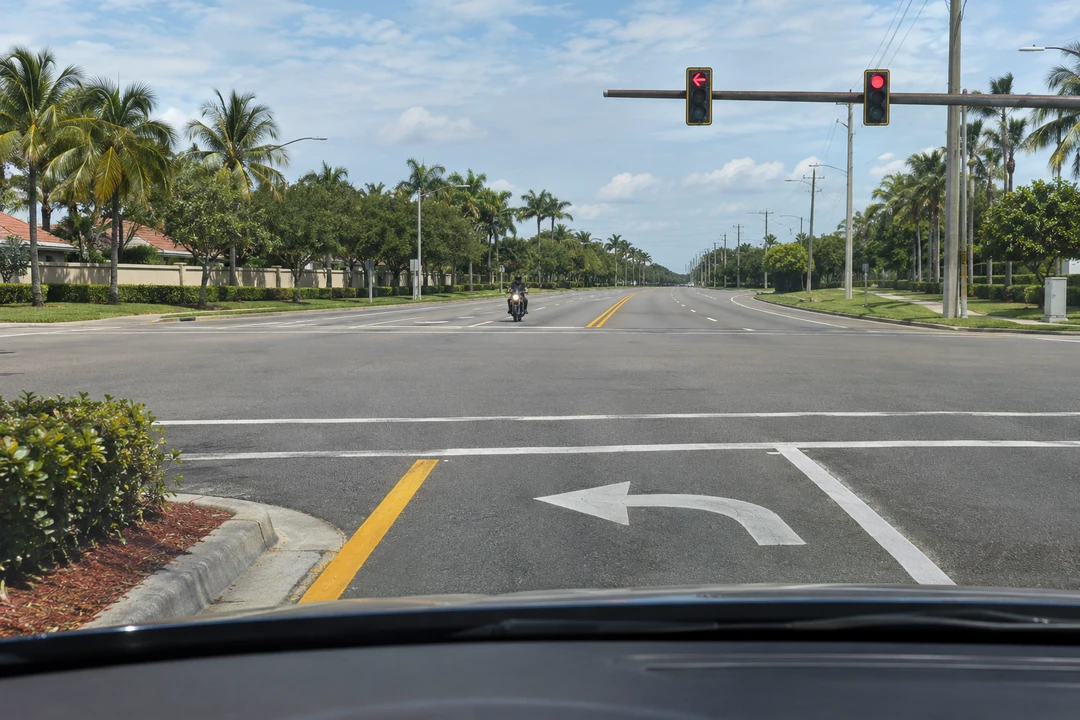
Florida uses a modified comparative-fault rule for negligence actions to which the statute applies. A claimant’s recoverable damages are reduced in proportion to their fault, and a claimant found more than 50 percent responsible for their own harm cannot recover under that rule. The application of the law to a particular case requires individual review. (flsenate.gov)
For illustration, if legally established damages were $100,000 and the rider were assigned 20 percent fault, the proportional reduction would leave $80,000 before other applicable adjustments, fees, or costs. This is a mathematical example, not a prediction of compensation. It shows why evidence about responsibility deserves attention alongside medical documentation. (flsenate.gov)
When discussing allegations about speed, visibility, lane position, or braking, ask what evidence supports each allegation. Distinguish something a witness actually saw from an inference made afterward. Request a plain-language explanation of both favorable evidence and weaknesses rather than reassurance that ignores disputed facts.
A bike crash attorney should be prepared to discuss the conduct at issue, not simply characterize the rider or driver. Ask how the investigation would address competing accounts. That conversation is more useful than a promise that fault will be easy to establish.
Identify insurance that actually applies
Do not assume the personal injury protection coverage associated with a car will pay for injuries sustained while riding a motorcycle. Florida’s required auto PIP coverage does not cover the insured while riding a motorcycle. Motorcycle injury claims therefore require a coverage review suited to the vehicle and circumstances. (myfloridacfo.com)
Provide complete policies when available, not just an insurance card. Ask counsel to review bodily injury liability coverage, uninsured or underinsured motorist coverage, medical payments coverage, and collision coverage where relevant. These coverages serve different purposes, and their availability depends on the policy and circumstances. (floridabar.org)
For your first appointment, gather:
- Your motorcycle declarations page, policy, and endorsements.
- Insurance information exchanged after the collision.
- Household vehicle policies you want counsel to assess for possible relevance.
- Coverage letters, reservation-of-rights letters, or written denials.
- Any documents you have been asked to sign.
Treat this as a review list, not confirmation that every policy applies. If a document is missing, identify the insurer and policyholder as accurately as possible. Ask which records should be requested next instead of delaying the conversation until your file feels complete.
Document injuries and their practical consequences
Medical expenses are not always valued simply by adding the amounts printed on invoices. Florida law contains specific rules governing evidence and recovery of past and future medical expenses, including distinctions involving paid charges, unpaid charges, and health coverage. A motorcycle injury attorney should explain how those rules affect the records needed for your case. (flsenate.gov)
Keep treatment decisions with your healthcare professionals. For legal preparation, organize discharge instructions, appointment information, bills, payment explanations, and work-status notes. Record questions for your provider separately from questions for your attorney so neither conversation substitutes for the other.
Describe limitations concretely. Instead of writing only “my shoulder hurts,” note the task you attempted, the difficulty you experienced, and any help you needed. Examples might include fastening clothing, carrying groceries, completing a work assignment, or sleeping comfortably. Do not exaggerate or use a diary to diagnose yourself.
If cost, transportation, or scheduling prevents an appointment, tell your provider and attorney about the obstacle. Ask how to document the situation and explore appropriate arrangements. The goal is an accurate account of your recovery, including practical difficulties, rather than a polished narrative that leaves important circumstances unexplained.
Evaluate losses beyond motorcycle repairs
Depending on the evidence and applicable law, personal injury damages may include medical expenses, lost earnings or earning ability, and nonfinancial harm such as pain, disability, disfigurement, and loss of enjoyment of life. These categories require support; they are not automatic payments attached to a diagnosis. (flcourts-media.flcourts.gov)
Prepare a loss inventory that separates different concerns:
- Treatment costs: Identify providers, bills received, payments made, and balances you do not understand.
- Work disruption: List missed shifts, changed duties, reduced hours, and available employer records.
- Personal property: List damage to the motorcycle, helmet, riding clothing, and other items for review.
- Daily activities: Describe household tasks, family responsibilities, and recreation affected by the injury.
- Future concerns: Write down anticipated treatment or work questions to discuss with the appropriate professional.
For example, a rider returning to a desk role may still have restrictions affecting another part of the job. Note the actual duties involved rather than assuming that any return to work resolves the issue. Ask a motorcycle injury lawyer what additional employment or medical documentation would help evaluate the claimed loss.
Avoid assigning your own multiplier to medical bills. Ask instead how each requested category would be demonstrated and which uncertainties remain.
Clarify helmet issues without guessing the outcome
Florida generally requires protective headgear for motorcycle operators and passengers, with a statutory exception allowing a person over 21 to ride without it when covered by an insurance policy providing at least $10,000 in medical benefits for motorcycle crash injuries. The statute also addresses eye protection for operators. Confirm the requirements applicable to your circumstances with counsel. (flsenate.gov)
Tell your attorney accurately what equipment you wore and what happened to it after the collision. Include photographs, purchase information, or its current location if available. Do not discard an item simply because it appears unusable; first ask whether it needs to be preserved for inspection.
Separate compliance questions from conclusions about the entire claim. Ask counsel to explain any alleged connection between equipment use, the injuries being claimed, and comparative fault. An individualized assessment should address those distinct issues rather than treating helmet status as a shortcut to a promised outcome.
Confirm deadlines early
Florida generally provides a two-year limitations period for negligence claims accruing after March 24, 2023. The applicable deadline depends on the claim, when it accrued, and any relevant exceptions or other rules. Have an attorney calculate the deadline for your specific collision rather than relying on a general webpage or an insurer’s ongoing correspondence. (flsenate.gov)
Claims involving governmental entities require separate attention. Florida’s sovereign-immunity statute includes presuit notice requirements and other restrictions that differ from an ordinary claim against a private party. If a public vehicle, roadway condition, or government entity may be involved, identify that possibility when requesting legal review. (flsenate.gov)
Bring the exact crash date and every dated letter you have received. Flag any demand to respond, attend an examination, provide documents, or sign paperwork. Ask the attorney which dates are legal deadlines, which arise from a policy, and which simply reflect a proposed schedule.
If you are unsure whether a deadline has passed, request an assessment rather than deciding the issue yourself. Provide the dates honestly and avoid postponing the conversation while searching for a missing record.
Prepare for insurance communications and settlement discussions
Before answering detailed questions or signing documents, ask counsel to explain your responsibilities under any applicable policy and the purpose of the request. Your own insurer’s requests may raise different issues from communications with another party’s insurer. Bring the complete letter or form so the discussion addresses its actual wording. (floridabar.org)
Create a simple communication log for your own organization. Record the caller’s name, company, telephone number, date, claim number, and requested action. Save voicemails and written offers in the same folder rather than relying on memory.
For any proposed settlement, request a written explanation of:
- Which claims and parties the proposed agreement addresses.
- Which losses have been considered and which remain uncertain.
- The proposed attorney’s fee and case expenses.
- Medical balances or reimbursement issues requiring resolution.
- The estimated amount payable to you after identified deductions.
Florida Bar guidance recognizes a client’s right to understand fees and expenses and to receive and approve a closing statement detailing the recovery and financial distribution. Ask for explanations before approval, especially if the gross settlement figure differs substantially from the estimated net amount. (floridabar.org)
A useful discussion leaves you able to explain the proposal in your own words. If you cannot, ask for clarification before making your decision.
Select representation with clear expectations
Whether you search for a motorcycle accident attorney or a bike accident lawyer, evaluate the person and proposed representation rather than the label alone. Ask about actual experience with comparable matters, who would handle the work, and whether other lawyers would participate. Florida Bar guidance specifically recognizes prospective clients’ rights to information about experience and referral arrangements. (floridabar.org)
Use the consultation to assess communication as well as legal analysis. Request an explanation of the known issues, missing information, and proposed next steps. Be cautious about treating confidence as evidence or a projected recovery as a commitment.
Discuss practical arrangements explicitly:
- The person responsible for routine updates and substantive legal questions.
- How to submit records and report new treatment or work changes.
- Whether meetings can accommodate your recovery-related limitations.
- How your free consultation with Manny Arce will work.
- What must happen before representation begins.
If you used the term bike injury lawyer in your search, clarify that the matter involves a motorcycle rather than a bicycle. Give the crash location and whether you were operating the motorcycle or riding as a passenger. Specific intake information helps keep the discussion focused on the legal service you need.
Understand fees before authorizing work
A contingency fee arrangement generally ties the lawyer’s fee to a recovery, but fees and case expenses are different. For injury matters the Law Offices of Manny Arce accepts, no attorney’s fees or case costs are owed to the firm if there is no recovery. The written fee agreement explains the fee percentage and treatment of expenses. (floridabar.org)
Ask for a walkthrough of a hypothetical distribution using the proposed contract. Clarify whether expenses are deducted before or after the percentage fee is calculated and who advances costs. Ask how the written fee agreement applies the firm’s no-recovery policy. (floridabar.org)
Take time to read the documents. Mark unfamiliar terms and request plain-language explanations. A transparent fee discussion should help you compare representation options without confusing an advertised phrase with the terms you are actually being asked to accept.
Arrange a focused review of your South Florida claim
Request an individual assessment from a Florida-licensed attorney who handles motorcycle accident claims involving Miami, Doral, Kendall, or your specific South Florida crash location. Start with the collision date, your role as rider or passenger, current treatment, and any immediate paperwork concern. The first consultation with Manny Arce is free; ask about availability and bring your most urgent questions.
You do not need a perfect file to begin. Bring what you have, identify what is missing, and prepare your three most urgent questions. Use the conversation to establish a practical next step: a deadline review, a coverage assessment, a document request, or a decision about representation.
Take the next step toward an informed decision. Arrange a case-specific review before relying on assumptions about fault, insurance, or settlement value. Seek a clear explanation of your options, the uncertainties, and the work proposed on your behalf.
This page provides general information about Florida motorcycle accident matters, not legal advice or a guarantee of any result.